If you want to know how to stop a dog pulling on lead, you've probably already tried everything the internet told you, stop-start, change direction, treat-lure, harness, head collar, the lot. And your dog is still pulling. Still dragging you down the street like you're water-skiing behind a Labrador. Still making every walk a battle of strength and willpower that leaves you frustrated, your shoulder aching, and your dog none the wiser. That's because most lead walking advice treats the symptom, the pulling, without addressing why your dog is pulling in the first place. At Unleashed K9 in Liverpool, we fix the underlying problem, which means the pulling stops and stays stopped. Not managed. Not reduced. Fixed.
Loose lead walking training is one of the most common requests we get at Unleashed K9, and it's one of the most satisfying to deliver, because the change is immediate and dramatic. Danny Wells and the team have trained hundreds of dogs to walk on a loose lead, from tiny terriers to giant breeds, from puppies that have never learned to walk properly to adult dogs that have been pulling for years. If your dog pulls on the lead, we can fix it. Usually in the first session. That's not arrogance, that's experience.
Why Does My Dog Pull on the Lead?
Dogs pull on the lead for one simple reason: it works. Every time your dog pulls forward and gets where they want to go, the pulling is reinforced. Your dog has learned, through thousands of repetitions, that pulling equals progress. You've been accidentally training your dog to pull every single day, on every single walk, for however long you've had them. That's a lot of reinforcement to undo.
But there's more to it than simple reinforcement. Dogs pull for different reasons, and understanding the motivation changes how we address it:
- Excitement and arousal: dogs that pull because the world is incredibly exciting and they can't get to it fast enough. These dogs are over-threshold the moment they step out the front door
- Lack of engagement with the handler: dogs that pull because there's no reason not to. You're not interesting, the environment is. They're not connected to you on the lead, you're just the anchor
- Never been taught an alternative: many dogs have simply never been shown what loose lead walking actually looks like. They don't know what you want because nobody's ever taught them
- Breed drive: working breeds, sporting breeds, terriers, sighthounds. Some dogs are genetically wired to move forward with purpose. That's not a fault, it's genetics. But it needs channelling properly
- Anxiety or reactivity: some dogs pull because they're anxious and want to get past triggers as quickly as possible. If your dog is pulling towards or away from specific things, the pulling might be a symptom of a deeper issue that needs addressing through our reactivity training programme
At your Initial Assessment, we identify which of these factors, or combination of factors, is driving your dog's pulling. That diagnosis determines the approach, and the approach determines the result.
How Do We Stop a Dog Pulling on the Lead?
We teach your dog that walking next to you is the most rewarding place to be. Not through bribery, holding a treat at your side and hoping the dog stays there isn't training, it's management. We build genuine engagement between you and your dog so that walking beside you becomes the default, not the exception.
The Unleashed K9 approach to lead walking training covers:
- Handler mechanics: how you hold the lead, where your hands are, how you move, your body language, your timing. Most owners are inadvertently communicating the wrong things to their dog. We fix that first
- Lead pressure understanding: teaching your dog what lead pressure means and how to respond to it. Most dogs have never been taught this. They feel pressure on the collar or harness and push into it harder. We teach them to yield to pressure instead of fighting it
- Position and engagement: teaching your dog that the position beside you is valuable. Not because there's food there, but because the relationship and the reinforcement structure make it the most rewarding position available
- Impulse control around distractions: dogs that pull towards other dogs, people, squirrels, or anything else that catches their eye need impulse control training alongside lead skills. We build both simultaneously
- Real-world proofing: practising in actual walking environments, not just in a training hall. Your dog needs to walk nicely on your street, in the park, past other dogs, near traffic, and in every other situation you'll encounter on a daily walk
The tools we use depend on the dog. Some dogs respond brilliantly to a flat collar and clear communication. Others benefit from transitional tools, slip leads, long lines, or for dogs with extreme pulling behaviour, e-collar training as part of a broader programme. We're not ideological about equipment. We use whatever works for your specific dog, and we'll explain exactly why we're recommending it.
What Equipment Do I Need for Lead Walking Training?
Bring whatever you're currently using. That's how we start every lead walking session, with your existing setup, your existing routine, your existing problems. We need to see what's happening before we change anything.
The equipment conversation is one of the most overcomplicated topics in dog training. The internet will tell you that a specific harness, a specific lead, or a specific head collar is the answer to pulling. It's not. Equipment is a tool, it facilitates training, but it doesn't replace it. A no-pull harness doesn't teach your dog to walk nicely. It just makes pulling slightly less effective. The moment the harness comes off, the pulling comes back, because the dog hasn't learned anything.
We'll advise you on appropriate equipment based on your dog's size, strength, breed, and the specific training approach we're taking. For most dogs, you'll end up with a simple lead setup that's far less complicated than what you started with. The skill is in the handling, not the gear.
How Quickly Will My Dog Stop Pulling?
Most owners see a noticeable difference within the first session. That's not a marketing claim, it's what happens when you actually show a dog what you want and give them a reason to do it. Dogs are smart. When the communication is clear and the reinforcement structure makes sense, they pick it up fast.
The first session typically produces what we call the "is this the same dog?" moment. Your dog will walk beside you on a loose lead, probably for the first time ever, and you'll wonder why nobody showed you this years ago. That's the starting point. From there, we build consistency, proof the behaviour around distractions, and ensure the skills transfer from the training environment to your daily walks.
Most lead walking cases are resolved within 2-4 sessions. Some dogs, particularly those with deeply ingrained pulling habits or underlying behavioural issues, may need longer. We'll be honest with you after the assessment about what to expect. If your dog's pulling is actually driven by anxiety or reactivity rather than simple habit, we'll recommend addressing that through the appropriate programme alongside the lead work.
Robbie, our Senior Trainer, is particularly skilled at lead work and has a knack for getting owners to understand the mechanical side, where your hands go, how you manage lead length, how your body position affects the dog. Small changes in handler mechanics often produce immediate, dramatic improvements in the dog's behaviour on the lead.
Can Any Dog Learn to Walk on a Loose Lead?
Yes. Every single one. We've taught loose lead walking to dogs that had pulled for ten years. Dogs that had dislocated their owner's shoulder. Dogs that had broken leads, snapped clips, pulled harnesses apart. Dogs that made every walk a genuine safety concern. Every one of them learned to walk nicely, because the principles are universal, it's the application that needs to match the individual dog.
Age isn't a barrier. Puppies can start learning lead skills from the moment they're comfortable on a lead. Older dogs can absolutely learn new habits, the idea that you can't teach an old dog new tricks is nonsense. It might take slightly longer to override years of pulling, but the result is the same. Size doesn't matter either. Got a Chihuahua that zigzags across the pavement? A Mastiff that tows you like a freight train? The training principles apply.
If your dog has additional challenges, reactivity, fear, prey drive, or other behavioural issues that affect their lead walking, we integrate the lead work with our broader behaviour modification or general obedience programmes. Lead walking doesn't exist in isolation. A dog that's reactive on the lead needs reactivity work alongside lead skills. A dog with zero impulse control needs impulse control training alongside lead mechanics. We see the full picture and build a programme that addresses everything.
Loose Lead Walking Training in Liverpool, St Helens & Merseyside
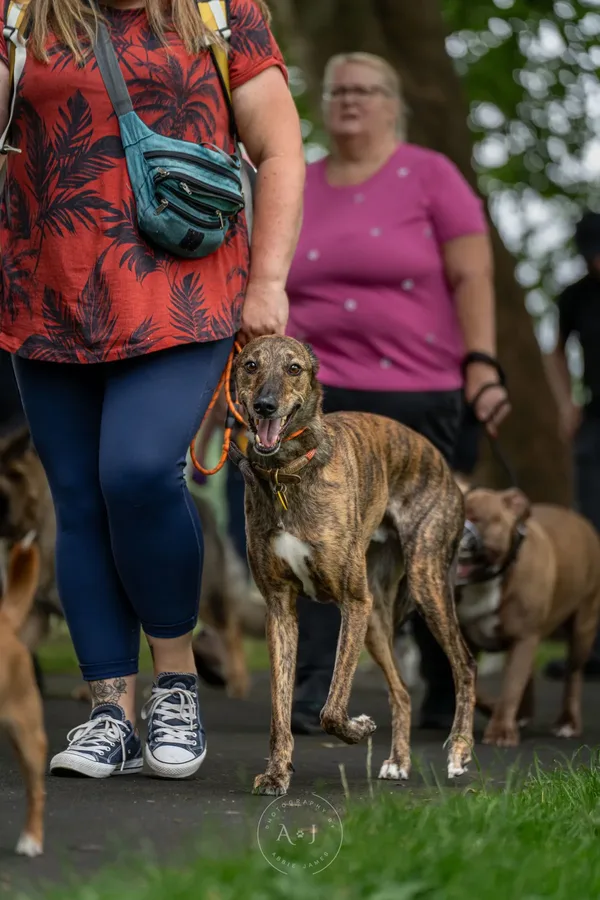
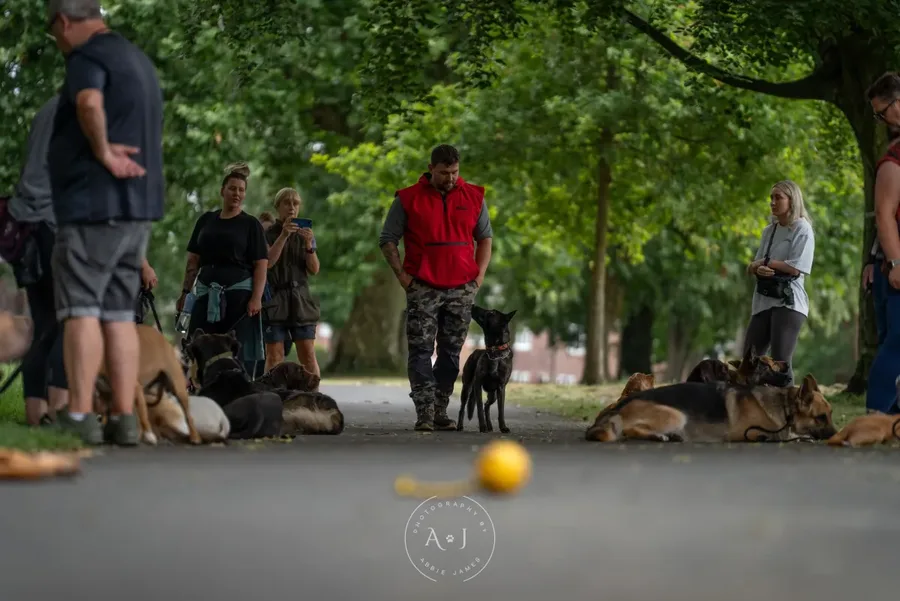
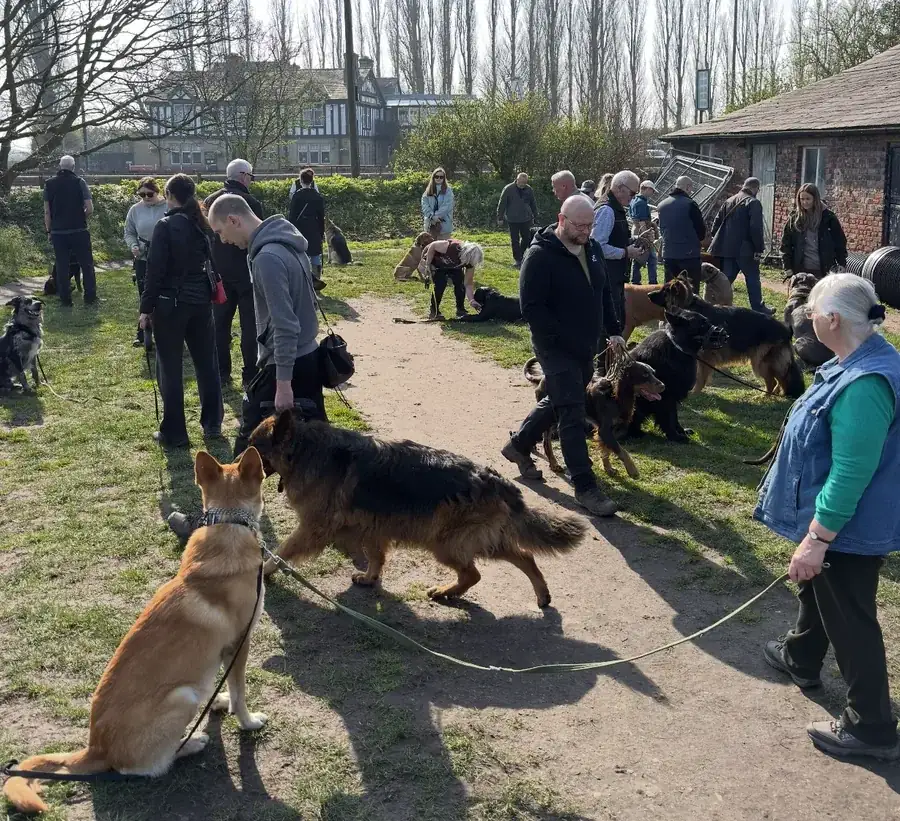
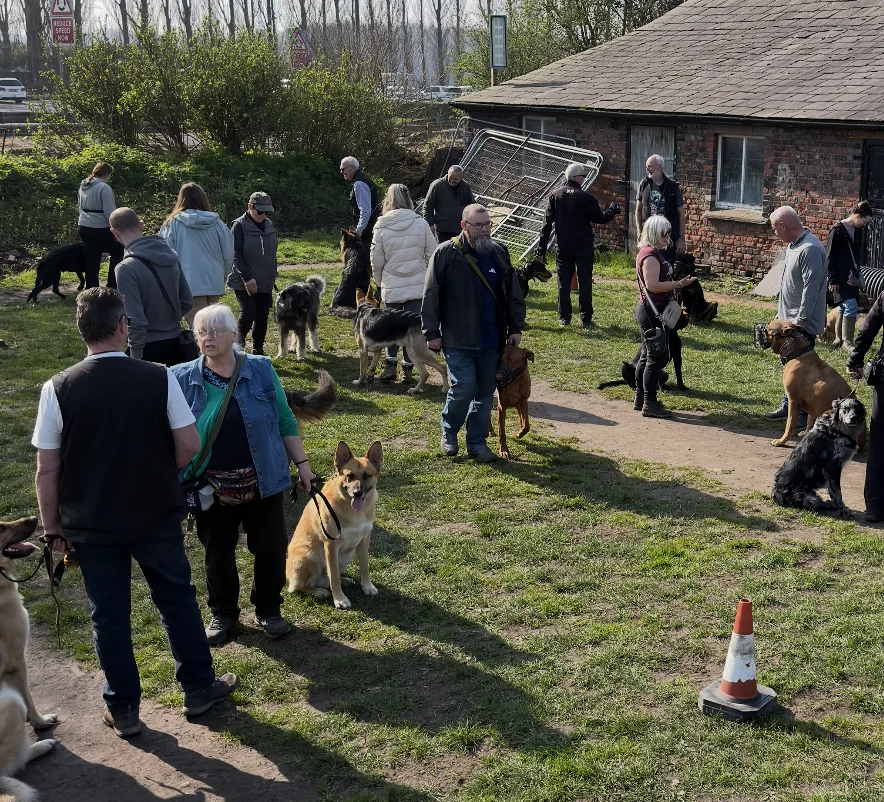
Lead walking sessions at Unleashed K9 take place at our facility at Brandreth House Farm in St Helens and in real-world environments around the local area. We deliberately train in varied locations, quiet roads, busy high streets, parks, paths near other dogs, because your dog needs to walk nicely everywhere, not just in one familiar spot.
We serve dog owners across Liverpool, St Helens, Warrington, Wigan, Widnes, and the wider North West. If the daily walk has become something you dread rather than enjoy, it doesn't have to stay that way. A dog that walks nicely on the lead transforms your entire relationship with them. Every walk becomes a pleasure instead of a battle. You go out because you want to, not because you have to.
Ready to enjoy walking your dog again? Book your Initial Assessment today, or call 07577 612912 to discuss your dog's lead walking issues. We'll have you walking together, properly, sooner than you think.