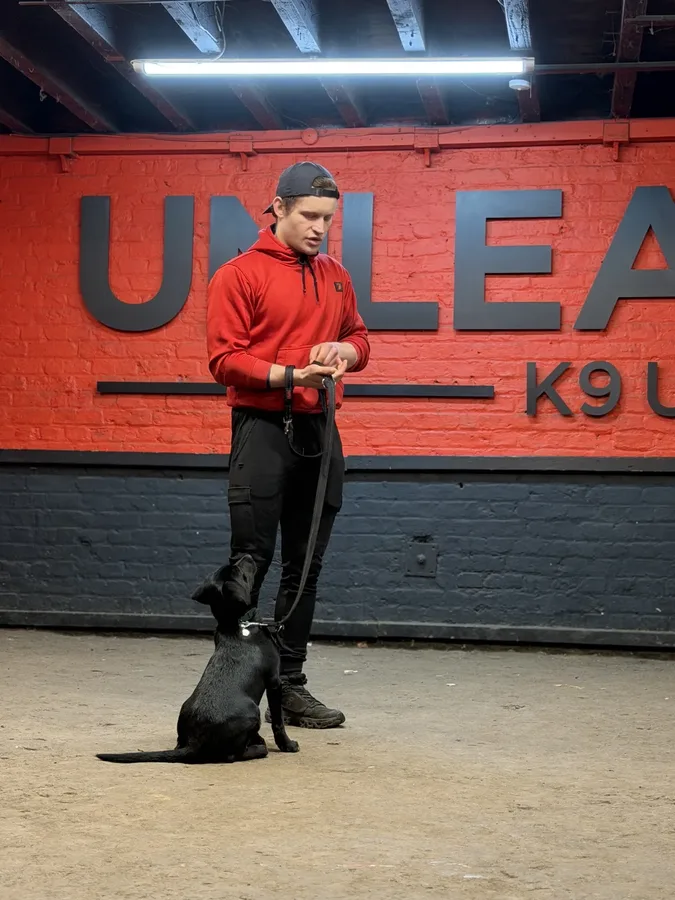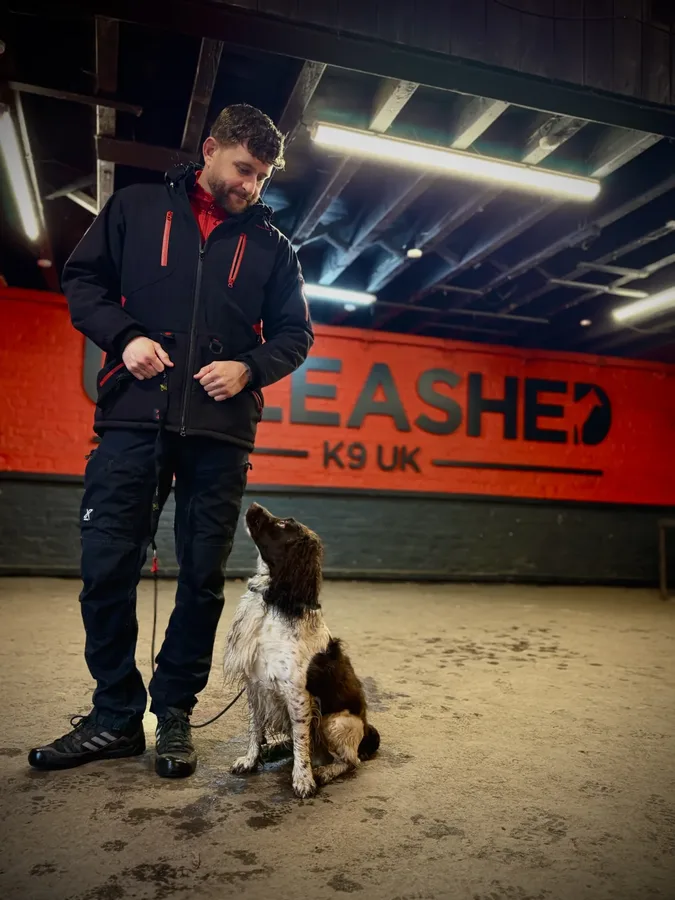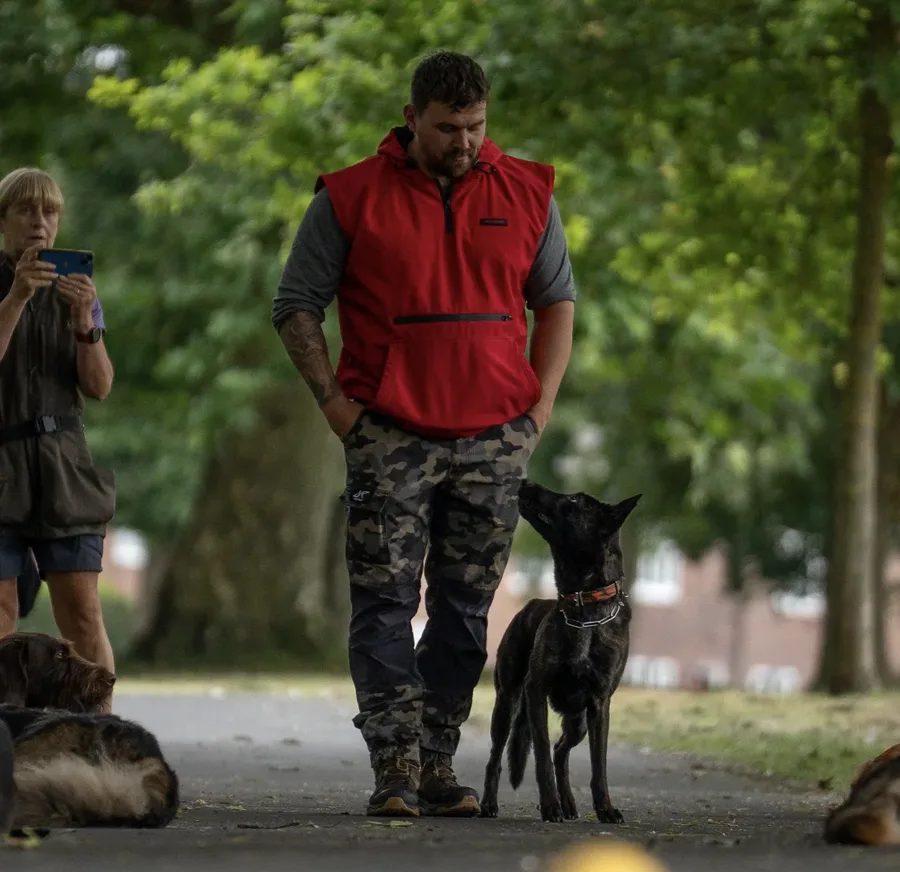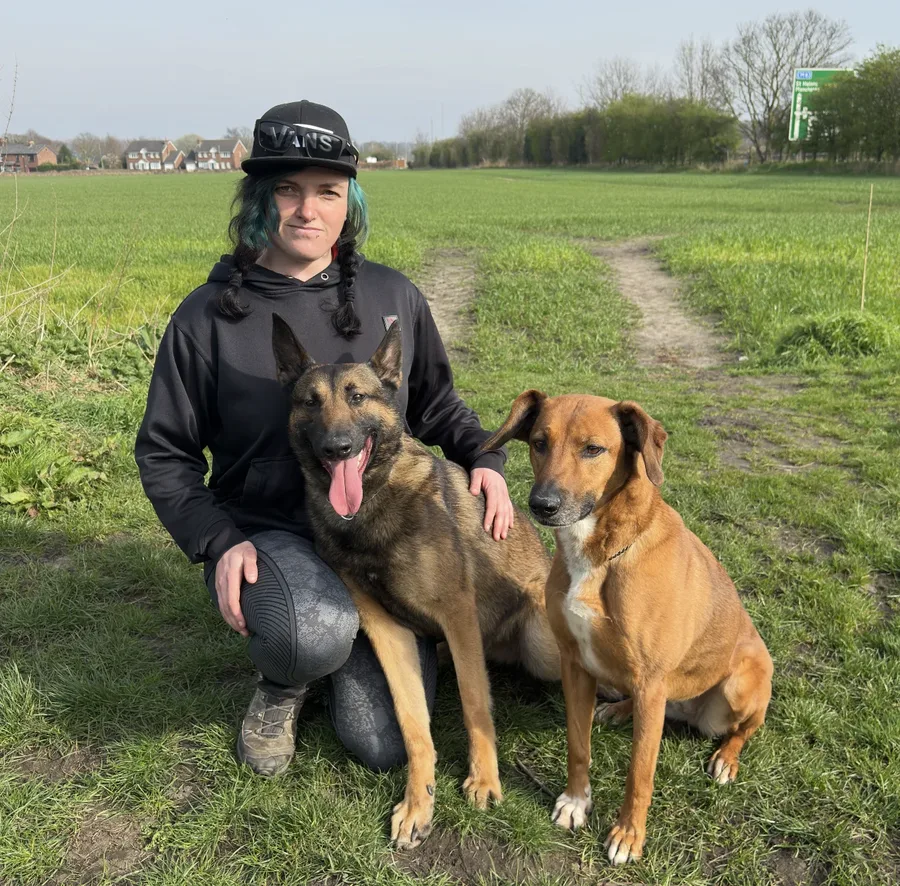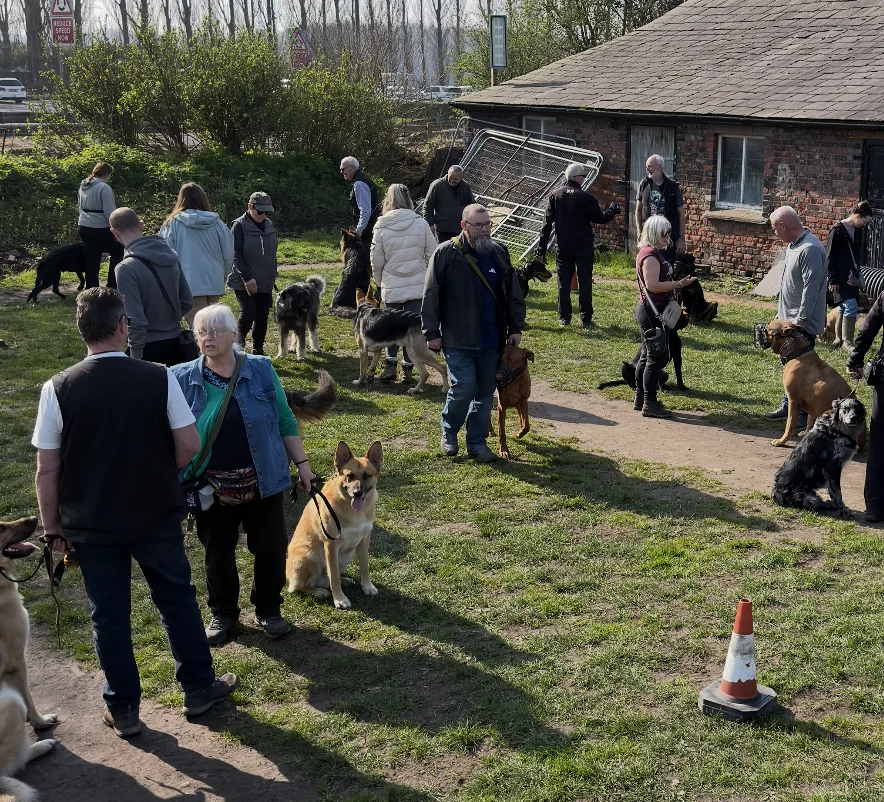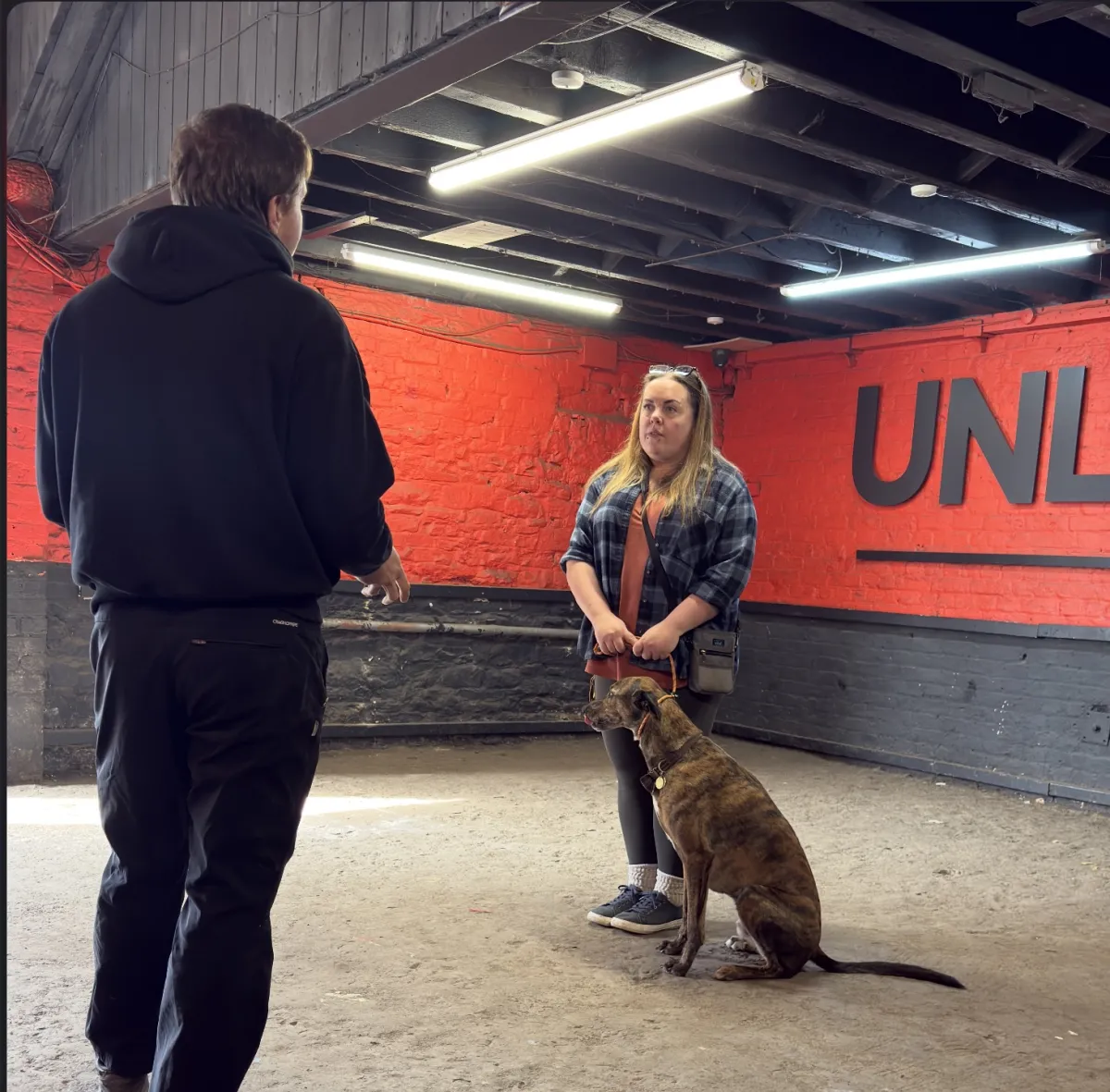
If you want to know how to train a rescue dog, the first thing you need to understand is this: your rescue isn't a blank slate. They come with history, and whether you know that history or not, it's shaping every behaviour you see. The cowering when you reach for them. The flinching at sudden noises. The wariness around men, around children, around other dogs. The unpredictable moments where they seem fine and then suddenly they're not. Rescue dogs carry their past in their body and their behaviour, and training them requires a different approach to training a dog you've raised from a puppy. At Unleashed K9, we understand rescue dogs. We've worked with hundreds of them across Liverpool, St Helens, and Merseyside, from nervous lurchers that won't leave their bed to reactive staffies that have been bounced through four homes. We know what these dogs need, and we know how to give it to them.
Danny Wells, our founder, has over 15 years of experience working with dogs from all backgrounds, including rescues that had been failed by the system, dogs that had been confiscated, and dogs that had experienced genuine abuse and neglect. His work on Channel 4's Death Row Dogs highlighted the challenges facing dogs in the rescue system, and his co-authored book What Your Dog Is Thinking explores the neuroscience behind how dogs process fear, trauma, and trust. That depth of understanding isn't optional when working with rescue dogs, it's essential. Every rescue dog at Unleashed K9 is handled with patience, expertise, and a genuine understanding of what they've been through.
Why Do Rescue Dogs Need Specialist Training?
Because the standard approaches don't account for what rescue dogs have experienced. A rescue dog that's spent weeks or months in a kennel environment has been through chronic stress. A dog that's been rehomed multiple times has learned that people leave. A dog that's been punished, neglected, or abused has learned that humans are unpredictable and potentially dangerous. You can't apply normal puppy training principles to a dog carrying that kind of baggage and expect it to work.
The most common challenges we see with rescue dogs include:
- Fear and anxiety: generalised nervousness, specific phobias, hypervigilance, inability to relax, and a heightened startle response. These dogs are in a constant state of low-level stress, and it affects everything, their ability to learn, their behaviour around people and other dogs, their capacity to settle in the home
- Trust issues with humans: dogs that have been let down, hurt, or abandoned don't trust easily. Reaching towards them triggers flinching. Sudden movements trigger cowering or snapping. Being approached by strangers triggers panic. Trust has to be rebuilt slowly, consistently, and on the dog's terms
- Reactivity: rescue dogs are disproportionately represented in our reactivity training programme. Poor socialisation, traumatic experiences with other dogs, and the stress of kennel environments all contribute to reactive behaviour. A rescue that's reactive isn't "aggressive", they're usually terrified
- Separation anxiety: extremely common in rescues. A dog that has been abandoned, rehomed, or spent time in a shelter has genuine reason to believe that when you leave, you might not come back. Separation anxiety in rescue dogs requires careful, graduated work to build the dog's confidence that their new home is permanent
- Unknown triggers: the hardest part of working with rescues is often that you don't know what happened to them. A dog that suddenly freezes around men in hats, or panics when they see a stick, or refuses to enter a room with a specific type of flooring, these reactions come from experiences you may never fully understand. We don't need to know the full history to work with the behaviour. We work with what the dog shows us
- Shut-down behaviour: some rescue dogs cope by shutting down completely. They don't react, they don't engage, they don't explore. They sit in their bed, avoid eye contact, and try to make themselves invisible. This is not a "good" dog, this is a terrified dog that has learned that doing nothing is the safest option. These dogs need the most patient, careful rehabilitation of all
How Does Rescue Dog Training Work at Unleashed K9?
With patience. Genuine patience, not the Instagram version where someone films a scared dog coming to them for a treat and calls it transformation. Real patience, where the dog sets the pace and we follow their lead, building trust incrementally through thousands of small, positive interactions over days and weeks.
Our rescue dog training programme is built around several core principles:
- Let the dog decompress: most rescues need a decompression period when they first arrive in a new home. This can last days to weeks, and during this time the dog's behaviour will fluctuate as they adjust to their new environment. We'll guide you through the decompression period and help you avoid the most common mistakes owners make during those critical first weeks
- Build trust before training: you can't train a dog that doesn't trust you. Before we work on obedience, lead skills, or any specific behavioural issue, we establish a relationship foundation. The dog needs to know that you're safe, predictable, consistent, and that good things come from engaging with you
- Read the dog, not the breed: rescue dog behaviour is driven by experience, not breed. A rescue Staffie isn't automatically aggressive. A rescue Collie isn't automatically anxious. We assess the individual dog, their specific history where known, and their current emotional state. Breed assumptions have got more rescue dogs into trouble than almost anything else
- Address the emotional state first: a dog that's in a state of chronic stress, anxiety, or fear cannot learn effectively. Before we teach skills, we address the underlying emotional state through environmental management, relationship building, and carefully structured confidence-building exercises
- Gradual exposure and socialisation: rescue dogs often missed the critical socialisation window or had negative experiences during it. We can't recreate that window, but we can carefully introduce new experiences in a way that builds positive associations rather than adding to the dog's list of fears
- Set realistic expectations: and this is important. Your rescue dog may never be the confident, bombproof dog you see on social media. They may always be nervous around certain things. They may always need management in certain situations. What we aim for is the best possible quality of life for your specific dog, given their specific history and temperament. That might be a dog that walks confidently on the lead and enjoys meeting people. It might be a dog that can manage a quiet walk without panicking. Both are victories, and both are worth working towards
Every rescue dog programme begins with an Initial Assessment where we evaluate your dog's current state, identify the specific challenges, and build a programme around what your individual dog needs. This isn't a one-size-fits-all approach, rescue dogs are, by definition, individuals with individual histories, and the training needs to reflect that.
The First Two Weeks with a Rescue Dog: What to Do
The first two weeks are the most important, and the most commonly mishandled. New rescue owners, full of excitement and love, typically do everything wrong. They overwhelm the dog with attention. They invite friends over to meet the new addition. They take the dog on long walks to exciting places. They give the dog full access to the house. And within a week, the dog is either shut down, anxious, reactive, or all three.
Here's what we advise instead:
Keep it boring. Seriously. The kindest thing you can do for a new rescue is nothing. A quiet room, a comfortable bed, regular meals at consistent times, short toilet breaks in the garden, and minimal demands. Let the dog decompress. Let them observe. Let them learn that this new environment is predictable and safe. It's not exciting. It's not Instagrammable. But it's what the dog actually needs.
Don't force interaction. Let the dog come to you. Sit in the room, ignore them, let them approach when they're ready. Forcing attention on a nervous rescue is one of the quickest ways to erode trust. They'll come to you when they feel safe, and that moment, when a terrified rescue chooses to approach you for the first time, is worth more than a hundred forced cuddles.
Establish routine immediately. Meals at the same time. Toilet breaks at the same time. Walks at the same time. Same door, same route, same routine. Dogs are creatures of habit, and rescue dogs especially need predictability. When a dog can predict what's going to happen next, their anxiety drops. When every day is different, their anxiety stays high.
Don't test their boundaries. Don't reach into their crate. Don't take their food bowl away to "test for resource guarding." Don't force them to meet other dogs, children, or visitors. The first two weeks are about building safety, not assessing limits. There'll be time for that later, under professional guidance.
Common Mistakes with Rescue Dogs
We see the same mistakes repeated over and over, usually made by well-meaning owners who are following bad advice from rescue charities, social media, or well-intentioned friends who don't understand canine behaviour.
"He just needs love." Love doesn't fix trauma. Structure, patience, and professional training fix trauma. Love is important, but love without structure creates an anxious, dependent dog that can't cope with the real world. Your rescue needs you to be their leader, not just their best friend.
"Let her go at her own pace with everything." There's a difference between patience and permissiveness. Yes, let the dog decompress. Yes, don't rush them. But at some point, the dog needs to be gently guided forward, or they'll stay stuck in their comfort zone, which might be a bed in the corner of your kitchen, forever. Knowing when to be patient and when to gently push is a skill, and it's one of the things we teach our rescue dog clients.
Flooding the dog with social experiences. "Let's take them to the pub! The park! The pet shop! Let's introduce them to all the dogs in the neighbourhood!" Every new experience is a potential trigger for a dog that hasn't been socialised or has had negative experiences. Socialisation needs to be controlled, gradual, and positive. Throwing a nervous rescue into overwhelming social situations doesn't "get them used to it", it traumatises them further and can trigger aggression or complete shutdown.
Can a Rescue Dog Be Fully Rehabilitated?
Many can, yes. We've worked with rescues that arrived unable to walk on a lead, terrified of human contact, and reactive to everything, and watched them transform into confident, happy, well-adjusted family dogs. Those transformations are some of the most rewarding work we do.
But honesty matters more than hope. Some rescue dogs will always carry their history with them. A dog that was severely abused may always flinch when a hand moves too quickly. A dog that was attacked by other dogs may always need management around unfamiliar dogs. That doesn't mean the dog can't have a brilliant quality of life, it just means you need to understand and work within their limitations.
What we promise is this: your rescue dog will improve. Their confidence will grow. Their trust in you will deepen. Their quality of life will get better. How far that improvement goes depends on the individual dog, their history, and how consistently you put in the work. But improvement, meaningful, visible, life-changing improvement, is the standard. That's what we deliver.
Simon brings particular patience and methodical skill to our rescue dog cases, with a calm, steady approach that puts nervous dogs at ease. His ability to read a dog's emotional state and adjust his handling accordingly is exactly what rescue dogs need, a human they can learn to trust at their own pace.
Rescue Dog Training in Liverpool, St Helens & Merseyside
Rescue dog training at Unleashed K9 takes place at our facility at Brandreth House Farm, East Lancashire Road, St Helens, with the option of at-home sessions where the dog's behaviour is primarily home-based. We serve rescue dog owners across Liverpool, St Helens, Warrington, Wigan, Widnes, and the wider Merseyside and North West region.
If you've recently adopted a rescue and want to give them the best possible start, or if you've had your rescue for months or years and the problems are getting worse, we can help. Every rescue deserves a proper chance at a happy life, and every rescue owner deserves support from people who genuinely understand what these dogs need. Book your Initial Assessment today, or call 07577 612912 to talk to one of the team. We'll meet your dog, understand their history and their challenges, and build a programme that helps them become the dog they were always capable of being. No judgement, no rush, just patient, expert help from people who care about getting it right.